

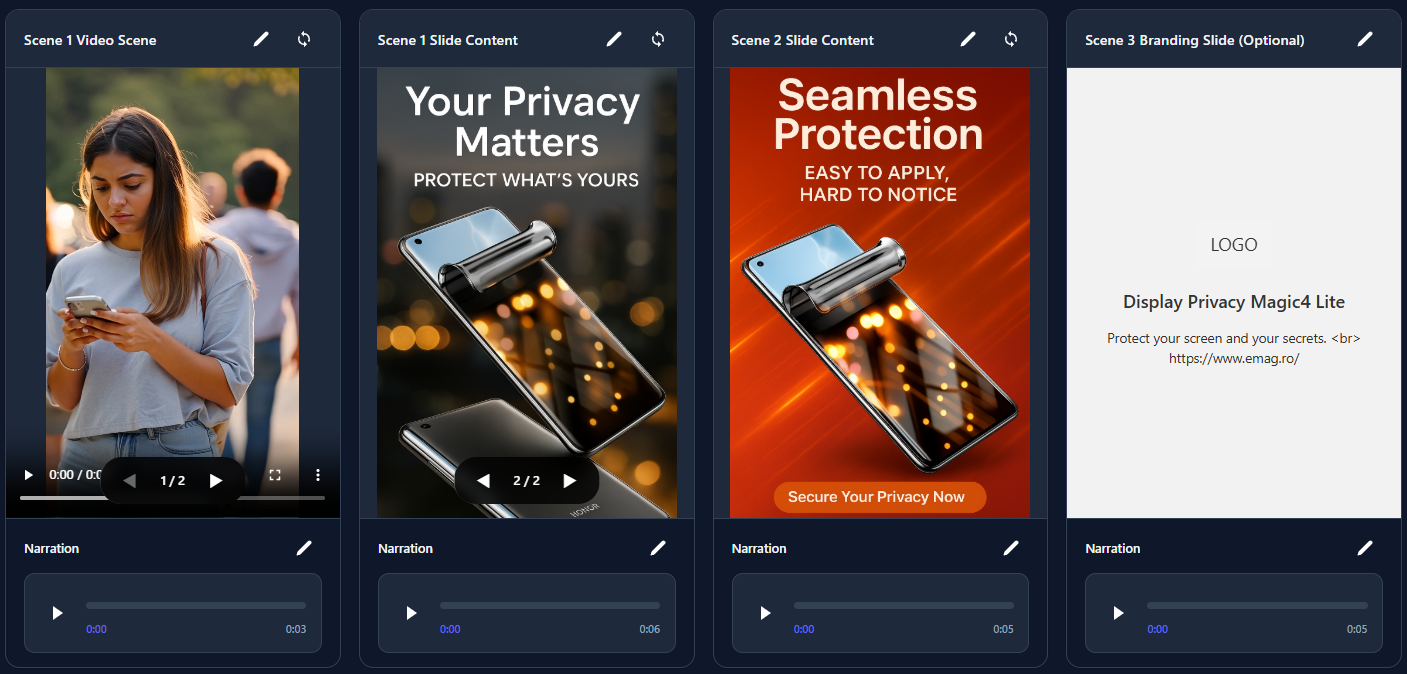
The 4‑Scene Snackable Ad Formula
Short-form video has taken over TikTok, Reels, and YouTube Shorts — and not just for entertainment. It’s now the most efficient format for brands to get attention, communicate a clear message fast, and drive action. But most brands struggle with one thing:
How do you create a video that’s short, structured, and still sells?
Enter the 4-scene snackable ad formula — the simplest way to build a high-converting short-form video in just 20 seconds.
This format works whether you’re a startup, a creator, or a brand looking to scale your paid performance. Below, we’ll break down the structure, give you examples, and show you how to use it to create scroll-stopping videos consistently.
Why Short-Form Ads Need Structure
You don’t have time to warm up your viewer — you have seconds. This is why frameworks like the snackable ad structure outperform random clips or unplanned videos.
Structured short-form ads:
- Capture attention instantly
- Deliver a clear message
- Stay consistent across creators
- Scale easily for testing
- Fit any channel or audience
If you’re already using AI storyboarding or manual storyboards, this 4-scene structure will slot perfectly into your workflow. If not, this is the simplest starting point.
The 4-Scene Formula (20 Seconds Total)
Scene 1 — Hook (0–5 seconds)
Your job here is simple: stop the scroll.
Great hooks usually:
- Make a bold claim
- Show a pattern-break visual
- Speak directly to a pain point
- Offer a surprising insight
If you need help writing hooks, our blog on attention-grabbing hooks breaks down proven patterns used in high-performing ads.
Scene 2 — Product Highlight (5–10 seconds)
This is where you show what the product does.
Keep it simple:
- One feature
- One benefit
- One visual
- One clear outcome
This aligns with most data-driven marketing principles: one message per asset always wins.
If you want a deeper dive into messaging, check out our psychology behind high-converting ads post.
Scene 3 — Call to Action (10–15 seconds)
Your CTA should:
- Tell viewers exactly what to do
- Be specific
- Be benefit-driven
- Match the tone of the ad
Examples:
- “Try it today — 30-day guarantee”
- “Shop now and save 20%”
- “See how it works”
This part is critical for creative testing for short-form ads, because you can easily test multiple CTAs while keeping the rest of the ad the same.
Scene 4 — Branding Outro (15–20 seconds)
This is your chance to reinforce brand identity.
Include:
- Logo
- Brand colors
- Tagline
- URL or social handle
If you’re refining your branding or want to keep your visual identity consistent, read our guide on brand consistency.
And yes — sometimes ending without a branding outro works better for performance. Test both.
Examples of the Formula in Action
Here are three plug-and-play templates you can use:
DTC Brand
- Hook: “This solved a problem I’ve had for YEARS.”
- Product: Show the product in action with one key benefit
- CTA: “Get yours now — limited stock”
- Branding: Clean logo reveal + website
Mobile App
- Hook: “This app saved me 5 hours this week.”
- Product: Show how the interface works
- CTA: “Download free today”
- Branding: App icon + tagline
SaaS Tool
- Hook: “Your marketing workflow is about to get 10x faster.”
- Product: Show dashboard or automation
- CTA: “Try free — no credit card”
- Branding: Logo + value proposition
Why This Formula Works
The format is:
- Fast
- Simple
- Repeatable
- Testable
- Platform-agnostic (TikTok, Reels, Shorts, Paid Social)
It also integrates perfectly with:
- AI storyboarding workflows
- Rapid creative production
- A/B testing
- Brand guideline enforcement
- Creator-generated content
If you want to learn how brands apply this inside real campaigns, read our piece on high-performing ads on a budget.
Ready to Build Your First Snackable Ad?
You can create this entire 4-scene structure inside Pixelplot in minutes.
Just:
- Paste your product URL
- Choose your brand style
- Let the AI generate scenes
- Export the final vertical video
Your first snackable ad is one click away — try Pixelplot today.