

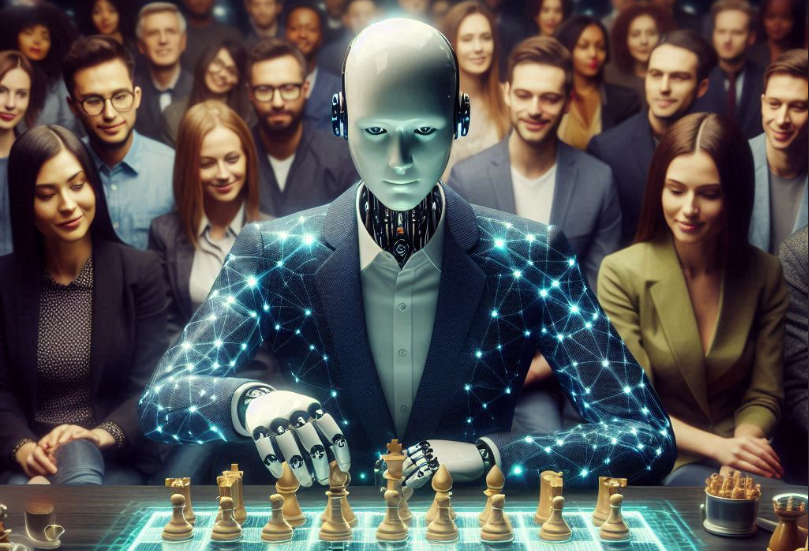
How AI Beat Chess Champions? In the annals of human achievement, few moments stand as a testament to the prowess of artificial intelligence (AI) like the triumphs of AI in the world of chess. The saga of how AI beat chess champions is not just a tale of technology overcoming human intellect; it is a story rich with emotion, tension, and a glimpse into the future of human-machine collaboration.
The Dawn of a New Era
It all began in the late 20th century when the notion of a machine outthinking a human chess grandmaster seemed like a distant dream. Chess, a game of deep strategy and profound complexity, was considered a bastion of human intellect. The journey of AI in chess started with rudimentary programs that could barely challenge amateur players. However, the rapid advancements in computing power and algorithm design soon set the stage for a confrontation that would change the course of history.
Deep Blue vs. Garry Kasparov
The year 1997 marked a watershed moment in the annals of chess. IBM’s Deep Blue, a supercomputer programmed to play chess, faced Garry Kasparov, the reigning world champion and arguably the greatest chess player of all time. The match, held in New York City, was a highly anticipated event, drawing the attention of both the tech world and the general public.
The games were intense and emotionally charged. Kasparov, known for his aggressive and innovative playing style, won the first game. But Deep Blue’s victory in the second game sent shockwaves through the chess community. As the match progressed, the tension mounted. By the end of the six-game series, Deep Blue emerged victorious, defeating Kasparov 3.5 to 2.5. The unthinkable had happened: a machine had outsmarted a human world champion.
The Emotional Aftermath
Kasparov’s defeat was more than just a loss on the chessboard; it was a profound emotional experience. The image of Kasparov, visibly distressed and contemplating his next move against the relentless logic of Deep Blue, became an iconic representation of human vulnerability in the face of advancing technology. For many, it felt like a symbolic defeat of human ingenuity.
Yet, this moment of despair also marked the beginning of a new relationship between humans and machines. It was a reminder that AI, while powerful, is a creation of human intelligence and ingenuity. The victory of Deep Blue was not just a triumph of technology, but also a celebration of human achievement in creating such an advanced machine.
The Rise of AlphaZero
Fast forward to 2017, and the AI landscape had evolved dramatically. Enter AlphaZero, an AI developed by DeepMind, a subsidiary of Alphabet (Google’s parent company). Unlike its predecessors, AlphaZero was not pre-programmed with specific chess strategies. Instead, it utilized a neural network and reinforcement learning, starting with just the basic rules of chess and playing millions of games against itself to learn and evolve.
AlphaZero’s encounter with Stockfish, the reigning computer chess champion at the time, was nothing short of spectacular. In a 100-game match, AlphaZero won 28 games and drew 72, without losing a single game. This performance was not just a demonstration of AI’s capability to play chess but a revelation of a new, almost intuitive approach to the game. AlphaZero’s moves were described as creative and unconventional, echoing the ingenuity of human grandmasters.
The Human Touch
What makes the story of AI in chess truly poignant is the human touch. The programmers, engineers, and scientists behind these AI systems poured their hearts and souls into their creations. Their triumphs in the field of AI are a testament to human curiosity, persistence, and creativity.
The journey of AI beating chess champions is more than a narrative of machine versus man. It is a story of collaboration, where human brilliance in creating advanced AI systems meets the strategic depths of chess. This synergy opens up new horizons, not just in chess but in countless fields where AI can augment human capabilities.
A Future of Collaboration
As we look to the future, the relationship between AI and humans promises to be one of collaboration rather than competition. AI’s victories in chess serve as a reminder of the incredible potential that lies in combining human creativity with machine precision. Together, we can explore new frontiers, solve complex problems, and create a future where technology and humanity coexist harmoniously.
In conclusion, the saga of AI beating chess champions is a powerful narrative of transformation. It captures the emotional highs and lows of human experience and highlights the incredible potential of AI. As we continue to innovate and integrate AI into our lives, we are reminded of the profound impact it can have, not just in games like chess, but in shaping the future of our world.
[…] Machine learning video editing is key in AI video generation. It automates video editing tasks. Complex algorithms analyze lots of data, like video, audio, and text, to make top-notch video ads. This tech helps businesses make videos faster and better, without needing to edit everything by hand. […]