
What is Storyboard: Definition, Uses, and How It Works (Article 1 of 3)
Series note: This is Article 1 in a 3-part series on storyboarding. Next up: Part 2—How to create Storyboards; Part 3—Advanced techniques and AI-powered workflows.
Introduction: What is Storyboard and Why It Matters
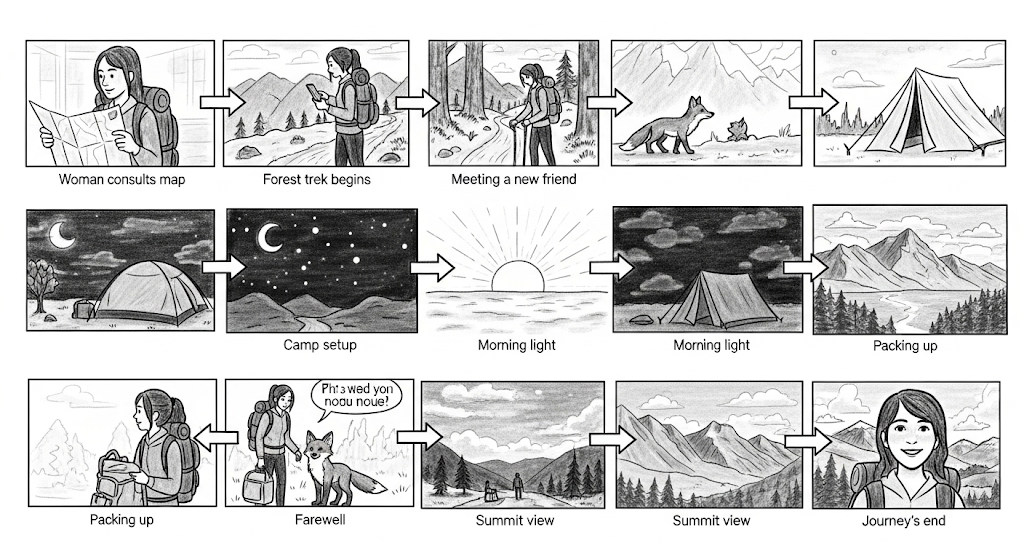
What is Storyboard? In simple terms, a storyboard is a visual map of your story, campaign, video, product flow, or presentation—arranged frame-by-frame to show how ideas unfold over time. Whether you’re planning a short film, a product demo, a social media ad, or a UX user journey, storyboarding turns abstract concepts into concrete, testable sequences. This article explains what a storyboard is, the components that make it work, and the steps to create one with confidence.
What Is a Storyboard? Definition and Purpose
A storyboard is a series of panels (or frames) that visualize the narrative. Each panel contains a sketch or reference image, brief descriptions (action, dialogue, on-screen text), and notes on camera angles, transitions, and timing. The purpose of storyboarding is to:
- Clarify your story and sequence before investing in production.
- Align teams (creative, marketing, product, engineering) on the same vision.
- Spot gaps early—saving time, budget, and rework.
Core Components of a Storyboard
- Frames/Panels: Boxes that represent each step or shot.
- Visuals: Sketches, thumbnails, photo references, or wireframes.
- Action/Description: What happens in the frame.
- Dialogue/VO/Text: Spoken lines, captions, or on-screen copy.
- Camera/UX Notes: Angles, transitions, interactions, or gestures.
- Timing: Duration or pace for each frame or scene.
- Metadata: Scene numbers, versioning, and ownership.
Why Storyboarding Works: Benefits Across Teams
- Faster decision-making: Visuals surface issues early.
- Stronger collaboration: Cross-functional stakeholders share one source of truth.
- Budget control: Avoids late-stage changes.
- Better storytelling: Ensures a coherent arc, call-to-action, and pacing.
- Measurable outcomes: Tie frames to objectives (awareness, conversion, education).
Where to Use a Storyboard: Film, Marketing, UX, and More
- Film/Animation: Shots, angles, and transitions before filming.
- Marketing/Ads: Storyboard your 6–30 second spots and landing pages.
- Product/UX: Map user journeys, empty states, and edge cases.
- Education/Training: Break lessons into digestible segments.
- Presentations/Webinars: Plan narrative beats and audience takeaways.
Storyboard Example: 30-Second Product Explainer
- Hook (0–3s): Problem statement on-screen; user looks frustrated.
- Value (3–12s): Product appears; quick demo highlights primary benefit.
- Proof (12–22s): Social proof badges and a before/after visual.
- CTA (22–30s): Clear call-to-action, brand logo, and URL.
This simple structure keeps your storyboard focused on outcomes, not ornamentation.
Tools and Templates: Start Storyboarding Faster
You can storyboard with pencil and paper, but digital tools speed up collaboration and versioning. Consider presentation tools, design platforms, or specialized storyboard apps. For inspiration, templates, and future-ready workflows, visit PixelPlot.ai—a resource hub you’ll want to keep bookmarked as you develop your visual storytelling practice.
Common Mistakes to Avoid in Storyboarding
- Over-detailing too early: Start low-fidelity; add fidelity as decisions solidify.
- Ignoring timing: Without durations, pacing suffers.
- Skipping the CTA or outcome: Every storyboard should lead somewhere.
- Not aligning on audience: Persona drift derails tone and message.
- Version chaos: Use clear naming, dates, and change logs.
What’s Next: Storyboarding Series Roadmap
This is Article 1 of 3. In the next article, we’ll build on “What is Storyboard” with practical templates, file setups, and review workflows. In Article 3, we’ll cover advanced techniques—animatics, interactive prototypes, and how AI can accelerate story development and testing.
Ready to put this into practice? Explore tools and examples at PixelPlot.ai, and check back for Parts 2 and 3 of this series.