
How to Design Mobile Game Ad Creatives That Actually Convert

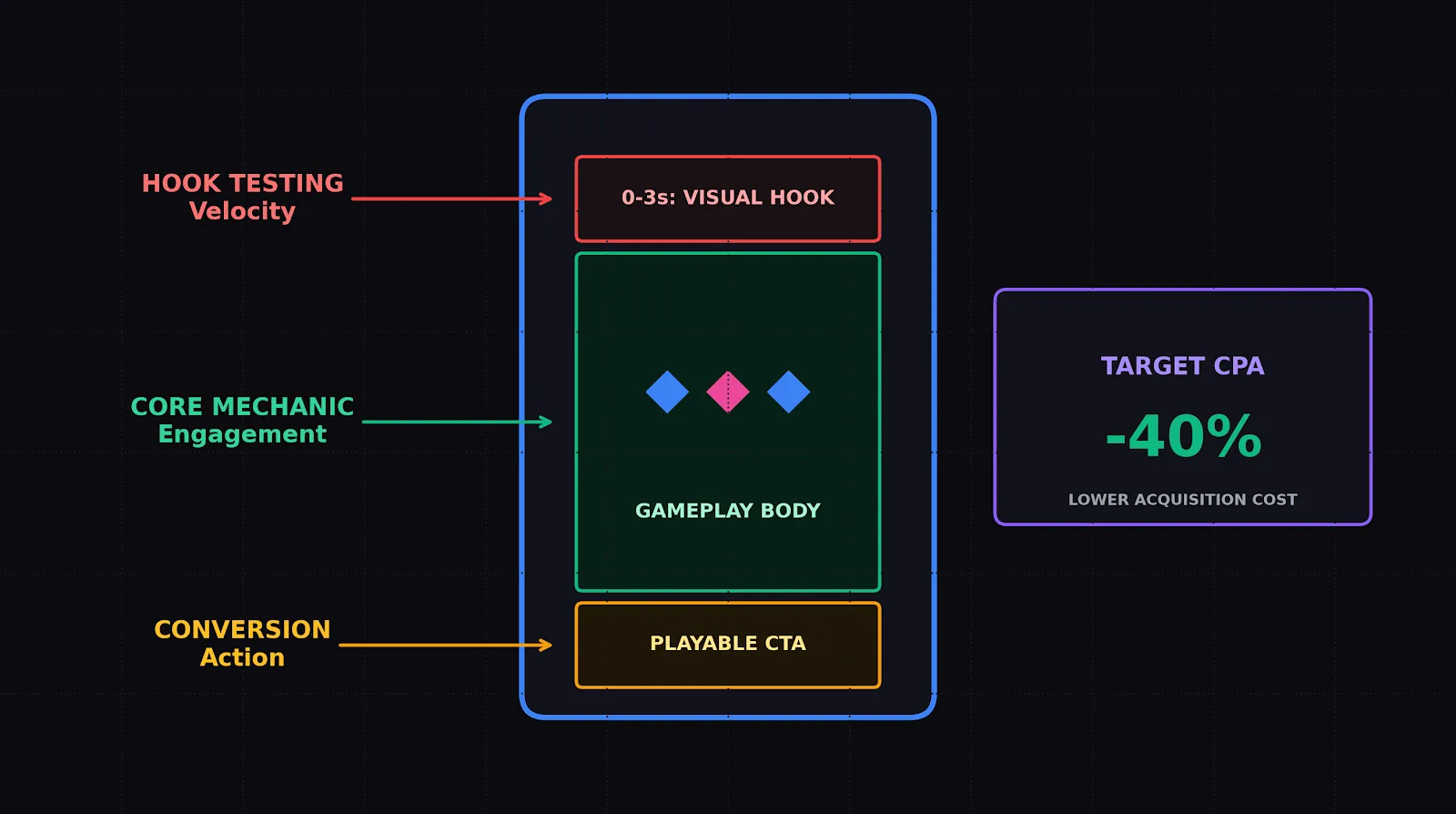
The mobile gaming market is facing a silent crisis: creative fatigue is killing User Acquisition (UA) margins.
A few years ago, you could find a winning creative, set up a Campaign Budget Optimization (CBO) campaign, and scale your spend for three to six months without touching your assets. Today, an ad can fatigue in less than 72 hours. Because the modern gaming audience is constantly bombarded with visual stimuli on TikTok, Instagram Reels, and YouTube Shorts, their brains have adapted to spot, filter, and skip ads at lightning speed.
If your studio relies on traditional creative production pipelines—where briefing, drafting, animating, and exporting a single gameplay variation takes two weeks—you are losing the UA war.
To survive, mobile game marketing needs to shift from manual craft to high-velocity, psychology-driven production. This guide outlines the exact, battle-tested creative strategies, psychological anchors, and systemized workflows used by top-grossing mobile game studios to build highly profitable game ad creative assets at scale.
1. The Anatomy of a High-Converting Game Ad
A successful mobile game ad is not a cinematic trailer. It is a highly engineered, direct-response video designed to hook attention, trigger micro-interactions in the viewer’s brain, and drive a friction-free install.
Regardless of whether you are scaling a casual match-3 game, a midcore strategy title, or a hyper-casual arcade game, every high-converting ad follows a strict 3-part modular structure:
┌─────────────────────────────┐
│ 1. THE HOOK (0-3s)          │ ──► Pattern interrupt, visual friction, or raw emotional reaction.
└──────────────┬──────────────┘
               ▼
┌─────────────────────────────┐
│ 2. THE CORE BODY (3-25s)    │ ──► Micro-satisfactions, progression loops, or fail states.
└──────────────┬──────────────┘
               ▼
┌─────────────────────────────┐
│ 3. THE OUTRO / CTA (25-30s) │ ──► Direct visual invitation to play + interactive mimicry.
└─────────────────────────────┘
I. The Hook (First 3 Seconds)
This is where 80% of your budget is won or lost. If your hook fails to achieve a $35\%+$ thumb-stop rate, the ad network’s algorithm will suppress your ad and charge you premium prices for impressions.
The hook must serve as a pattern interrupt. It should avoid slow logo animations, cinematic build-ups, or text introductions. Instead, it must drop the viewer immediately into a high-stakes scenario, a visceral visual action, or an intense emotional reaction.
II. The Core Body (3 to 25 Seconds)
Once you have stopped the scroll, the body of the ad must maintain engagement. Instead of showing random gameplay clips, you must showcase clear mechanic-driven progression loops. This means showing:
- An immediate problem or obstacle.
- A user interaction trying to solve it (tapping, dragging, swiping).
- The immediate, visual consequence of that action (leveling up, collapsing, exploding, succeeding).
III. The Outro & Call to Action (25 to 30 Seconds)
The ad must end with a clear, direct transition to the install action. The most effective CTAs in gaming are Playable mimicry end-cards. These are short, 5-second animated screens that display a simplified gameplay interface with a pulsing “PLAY NOW” or “INSTALL TO SOLVE” button, prompting the user’s brain to treat the screen as an active game rather than a static video.
2. Psychological Anchors: Why Players Tap
Behind every high-performing game ad creative is a deep understanding of human psychology. You aren’t just selling game mechanics; you are selling temporary emotional states.
Here are the four primary psychological anchors that drive player acquisition:
             ┌─────────────────────────────────────────────────────────┐
             │                PSYCHOLOGICAL ANCHORS                    │
             └───────────┬───────────────────────────────┬─────────────┘
                         │                               │
         ┌───────────────▼───────────────┐ ┌─────────────▼─────────────┐
         │       THE FAIL STATE          │ │     THE UPGRADE LOOP      │
         │   Cognitive Dissonance /      │ │   Dopamine Release /      │
         │   Urge to Correct Mistake     │ │   Satisfying Visual Order   │
         └───────────────────────────────┘ └───────────────────────────┘
                         │                               │
         ┌───────────────▼───────────────┐ ┌─────────────▼─────────────┐
         │       THE ESCAPE PATH         │ │      THE METAGAME         │
         │     Immediate Relief /        │ │    Deeper Progression /   │
         │     Hero Saving Fantasy       │ │    Long-term Investment   │
         └───────────────────────────────┘ └───────────────────────────┘
Anchor A: Cognitive Dissonance & “The Fail State”
This is the psychological engine behind some of the highest-converting mobile ads in history. By showing a user making an incredibly obvious, simple, or frustrating mistake during gameplay (e.g., pulling the wrong pin, matching the wrong colors, or picking a weaker character), you create intense cognitive dissonance in the viewer’s brain.
- The Psychological Hook: The human brain naturally craves visual order and resolution. When it sees an easy puzzle failed miserably on screen, it triggers an urgent desire to intervene: “I could easily do that better.”
- The Transition: This mental tension is immediately directed toward the “Install” button as the only path to resolve that tension and prove their own cognitive superiority.
Anchor B: Dopamine & “The Satisfying Visual Loop”
Conversely, you can tap into the brain’s desire for immediate, satisfying order. This works exceptionally well for puzzle, sorting, ASMR, and simulation games.
- The Psychological Hook: Show a chaotic screen (e.g., a completely messy room, unsorted colorful liquids, or cluttered blocks) being rapidly, cleanly, and seamlessly organized.
- The Transition: The rapid progression from chaos to complete order releases micro-doses of dopamine in the viewer. The ad body leaves them feeling satisfied, and the CTA promises that downloading the game will provide an ongoing source of this relaxing, stress-free feeling.
Anchor C: The Escape Path (Hero Saving)
This anchor taps into our primal evolutionary drive to protect, save, and rescue. It is the core driver of modern puzzle and narrative ads.
- The Psychological Hook: Drop a relatable character (such as a cold mother and child, or a hero trapped in a rising chamber of water) into immediate, life-threatening danger.
- The Transition: The viewer’s empathy and savior complex are triggered. By making the solution look simple yet unresolved on screen, you make the user feel that downloading the game is a direct mission to save the character.
Anchor D: The Metagame Loop (Sense of Autonomy)
For midcore, strategy, or RPG titles, users want to feel a sense of long-term ownership, strategic depth, and progression.
- The Psychological Hook: Show a character transforming from a weak, level-1 peasant clad in rags into a level-99 armored conqueror through a series of tactical decisions, base-building upgrades, or card choices.
- The Transition: This appeals to the user’s desire for autonomy, strategy, and long-term mastery, pre-qualifying highly valuable, high-LTV (Lifetime Value) players who are more likely to make in-app purchases.
3. Designing for the Platform: The Vertical Grid Safe Zone
One of the most common operational mistakes creative teams make is designing game ads as if they are widescreen desktop assets. When these ads are deployed on TikTok or Meta, critical gameplay UI, text overlays, and hook banners get cut off or completely covered by native platform interfaces.
┌──────────────────────────────────────┐
│  [TikTok/Reels Safe-Zone Canvas]      │
│  ┌────────────────────────────────┐  │
│  │     TOP: Brand Header Area     │  │  ◄── Best space for text hooks
│  │ ┌────────────────────────────┐ │  │
│  │ │                            │ │  │
│  │ │                            │ │  │  ◄── Place your core gameplay
│  │ │       CORE GAMEPLAY        │ │  │      and character action here!
│  │ │                            │ │  │
│  │ └────────────────────────────┘ │  │
│  │     RIGHT SIDE: UI Overlay     │  │  ◄── Avoid putting text or key UI
│  │     (Likes, Comments, Shares)  │  │      elements in this outer column
│  │     BOTTOM: User & Caption     │  │  ◄── Keep clean of important info
│  │────────────────────────────────┘  │
└──────────────────────────────────────┘
When building your vertical briefs, divide your $9:16$ canvas into three distinct vertical zones:
- The Top Zone (Upper 15%): Safe from native text and buttons. Use this area exclusively for your bold, high-contrast, attention-grabbing text hook (e.g., “Why is this level so hard?!”).
- The Center Zone (Middle 60%): The focal point of your ad. This is where your gameplay, character reactions, and micro-interactions must occur. Keep all critical visual elements centered to avoid getting clipped on devices with different aspect ratios.
- The Interactive Obstacle Zone (Bottom 25% & Right Column): TikTok overlays user descriptions, music tracks, and call-to-action buttons at the bottom of the screen, and social engagement buttons (like, comment, share) on the right edge. Keep this area entirely free of important text, indicators, or narrative action.
4. Setting Up Your High-Velocity Testing Workflow
You cannot scale game UA on intuition. You must build an agile, iterative workflow that treats creative production like a scientific experiment.
[ Phase 1: Deep Competitor & Motif Audit ]
                    │
                    ▼
[ Phase 2: Modular Script Generation ]
                    │
                    ▼
[ Phase 3: Fast-Track AI Pre-Production ] ──► (Verify Safe-Zones & Visual Pacing)
                    │
                    ▼
[ Phase 4: Automated Video Rendering ]
                    │
                    ▼
[ Phase 5: Structured ABO Hook Testing ]
Step 1: Conduct a Motifs Audit
Before writing scripts, analyze the current top-performing creatives in your game’s sub-genre using tools like the TikTok Creative Center or Meta Ad Library. Identify the recurring visual motifs: Is it puzzle gameplay? Is it a live-action reaction? Is it a narrative drama? Use these motifs as your structural starting points.
Step 2: Establish Your Core Ad Body
Create a solid, highly polished 20-second video body that showcases your game’s most engaging loop, your key value proposition, and a clear call to action. This asset remains your constant variable.
Step 3: Write 5 Highly Contrasting Hook Scripts
Using your selected psychological anchors, write five distinct 3-second opening scripts. Focus on dramatic contrasts:
- Hook 1 (Fail State): A player failing to solve a simple level-1 puzzle.
- Hook 2 (Contrarian Claim): “99% of people can’t get past level 5.”
- Hook 3 (ASMR/Satisfaction): A fast, perfectly synced visual clean-up loop.
- Hook 4 (Live Action): A split-screen showing a creator looking extremely frustrated while playing.
- Hook 5 (Curiosity Gap): Opening mid-action with a massive monster chasing a character.
Step 4: Rapid AI Prototyping & Production
Manually rendering five separate high-fidelity video hooks in traditional animation software can consume days of developer and designer time. To keep your testing cadence fast, modern UA teams rely on automated pipelines.
By leveraging a creative scaling platform gaming setup, you can programmatically swap out your opening hooks, alter background music, and overlay localized text onto your stable video body within minutes. This allows you to generate complete, platform-ready vertical video creatives without clogging your internal design team’s queue.
5. Media Buying Framework: Evaluating the Data
Once your five modular ad variations are rendered, they must be deployed under a strict testing protocol inside your ad account.
The ABO Test Setup
Do not mix your tests into an active Campaign Budget Optimization (CBO) structure. CBO allows the ad network’s algorithm to distribute spend freely, meaning it will likely dump all budget into one ad set based on early, unrepresentative metrics.
Instead:
- Build a campaign using Ad Group Budget Optimization (ABO).
- Create five identical Ad Groups, each housing exactly one of your hook variations.
- Keep your targeting parameters completely broad (e.g., country-wide, no specific interest tags) to let the creative do the targeting.
- Assign a small, equal daily budget to each group (e.g., equivalent to $1.5\times$ your target CPA per day).
The Analytics Audit
Run your test for 48 hours or until each ad group reaches at least 5,000 impressions. Then, pull your diagnostic funnel data:
| Metric | Formula | Target Benchmark | Performance Indicator |
|---|---|---|---|
| Thumb-Stop Rate |
(
3s Video Views
Impressions
) × 100 | > 35% | Measures Hook Effectiveness |
| Hold Rate |
(
10s Video Views
Impressions
) × 100 | > 15% | Measures Core Body Quality |
| Outbound CTR |
(
Outbound Clicks
Impressions
) × 100 | > 1.2% | Measures CTA Strength & Intent |
- If Thumb-Stop is high, but Hold Rate is low: Your hook stopped the scroll, but the gameplay body felt disconnected, boring, or failed to deliver on the hook’s promise. Fix the transition or game body.
- If Thumb-Stop is low, but Hold Rate is high: Your hook was boring, but those few who stayed loved the gameplay. Keep the game body exactly as it is and test three completely new visual hooks.
- If both are high: You have found a scaling winner. Move this specific creative asset into your scaling CBO campaign and raise the budget.
6. Elevating Your Creative Velocity with PixelPlot
The formula for sustainable mobile game scaling is simple: High creative volume + rigid analytical auditing = lower CPIs.
Trying to hit this volume manually is an expensive bottleneck. To stay ahead of the creative fatigue curve and continuously serve fresh assets to the auction, UA managers use PixelPlot to generate high-performing ai video ad creative for games. Our platform automates the tedious pre-production loop by generating varied, highly stylized hooks, aligning assets with native platform safe zones, and outputting multiple ratio variations in just a few clicks.
By pairing direct-response psychological frameworks with automated pre-production systems, you can stop guessing what will convert. Instead, you build an agile, high-velocity creative engine that systematically uncovers winning game ads, allowing your studio to scale profitably and predictably.
Master Your Pre-Production Funnel
Ready to streamline your game ad pipelines even further? Read our comprehensive guide on how to visually map out your modular ad variations, organize assets, and align safe-zones with our dedicated TikTok ad storyboard template tutorial.