
The Speed of Relevance: How to Scale AI Video Ad Variations Without Creative Fatigue

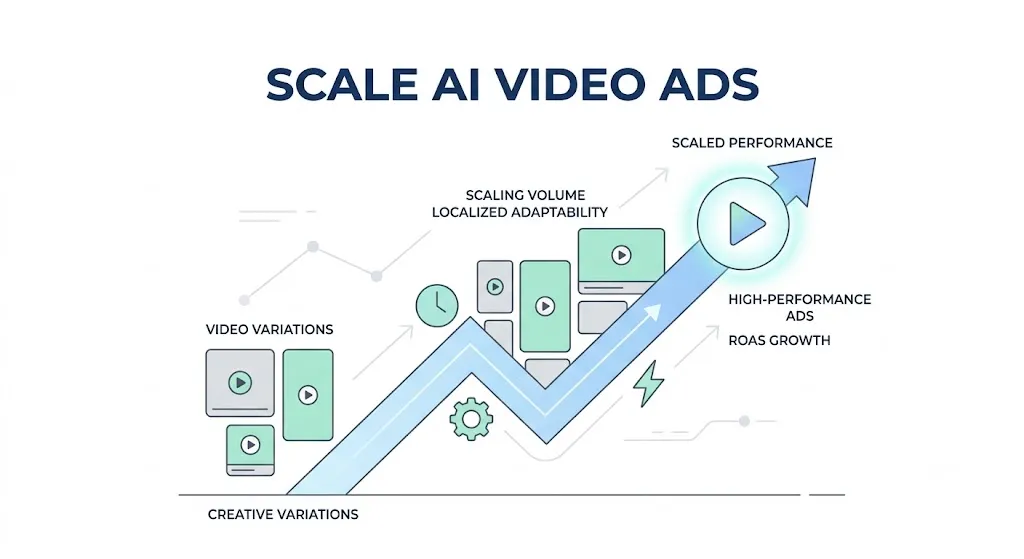
The ultimate bottleneck in digital marketing isn’t generating a creative idea—it’s testing it at scale. In paid social ecosystems like Meta and TikTok, creative fatigue sets in faster than ever. If you attempt to scale your budget using a single static concept or one standard video asset, your performance metrics will inevitably decay within days. This ad performance drop is particularly brutal when running high-budget campaigns across hyper-competitive regional hubs like Bucharest, Cluj-Napoca, or Western European tech centers.
To sustain a high-velocity growth strategy, modern brand and marketing teams must shift their operational perspective. You don’t need a single, perfect masterpiece; you need a system capable of producing and testing rapid, brand-aligned creative variations across multiple localized segments.
True, sustainable ai brand scaling relies on breaking a video down into modular, data-driven components. Instead of re-editing an entire project from scratch, automation allows you to swap variables programmatically while keeping your core message completely intact.
The Hook-and-Hold Iteration Framework
Successful multi-channel execution requires an automated creative pipeline that eliminates manual editing hours. By treating video production as a modular infrastructure rather than a sporadic artistic process, growth teams can effortlessly combat ad fatigue while maintaining strict control over their global identity.
┌────────────────────────────────────────────────────────┐
│               Unified Target URL/Asset                 │
└───────────────────────────┬────────────────────────────┘
                            │
                            ▼
┌────────────────────────────────────────────────────────┐
│       AI Brand DNA Ingestion & Context Layer           │
└───────────────────────────┬────────────────────────────┘
                            │
         ┌──────────────────┼──────────────────┐
         ▼                  ▼                  ▼
┌─────────────────┐┌─────────────────┐┌─────────────────┐
│ Meta Video Ads  ││TikTok Variations││LinkedIn Banners │
│ (1:1 / 4:5 Hook)││ (9:16 Auto-Gen) ││ (16:9 Carousel) │
└─────────────────┘└─────────────────┘└─────────────────┘
1. Dynamic Hook Isolation
The first three seconds of a short-form video dictate up to 70% of its conversion potential. Instead of changing the entire video narrative, focus your operational engine on generating 5 to 10 distinct opening hooks. By varying the visual framing, the opening text overlay, or the immediate problem statement, you can find the winning angle without draining production resources.
2. Contextual Resizing and Platform Formatting
A video that converts on a vertical mobile feed will underperform on a desktop placement if it isn’t native to the environment. True scaling means your creative pipeline must instantly adapt your core visual assets into square ($1:1$), vertical ($9:16$), and widescreen ($16:9$) formats. Re-centering the active visual elements automatically ensures no visual context is lost, which keeps your viewer retention steady across distinct social placements.
3. Persona-Driven Copy and GEO Adjustments
Your core brand DNA remains constant, but the marketing angle must match the viewer’s precise profile and location. A technology startup founder navigating the competitive tech scene in Bucharest requires a completely different hook and value proposition than a direct-to-consumer brand manager operating in a Western European market. By feeding your central asset framework through a specialized AI layer, you can generate copy variations that speak directly to distinct regional user pain points while preserving your structural identity.
Overcoming Content Decay on Paid Channels
Winning the modern paid acquisition game is entirely dependent on creative volume, local contextual relevance, and iteration speed. High-performing growth teams use automated creative pipelines to out-test creative fatigue before it kills their return on ad spend (ROAS).
| Marketing Metric | Manual Production Pipeline | Automated Variable Pipeline |
| Weekly Ad Variations | 2–3 video concepts | 20–50 brand-aligned iterations |
| Localization Speed | Days per market layer | Near-instantaneous asset generation |
| Ad Fatigue Mitigation | Reactive (after performance drops) | Proactive (continuous variation rotation) |
| Creative Testing Costs | High (hourly editing/agency fees) | Minimal (algorithmic iteration) |
When you build a pipeline dedicated to creative asset variation, your operational math changes completely. You can deploy and analyze dozens of video variations simultaneously, discovering winning creatives before your ad sets fatigue. A single high-performing product link or landing page becomes the foundation for a continuous cycle of fresh, engaging media assets.
Because every automation node is anchored directly to your core messaging framework, your visual and written output never drifts from your foundational identity.
Mastering GEO-Targeting and Algorithmic Search Intent
Scaling cross-channel marketing efforts means optimizing for both user attention and machine discovery. Modern search engine updates prioritize authentic, structurally sound content that possesses an unmistakable brand voice. If your localized content sounds generic or looks like a copy-pasted template, search crawlers and ad networks will treat it as background noise.
By introducing precise GEO-targeting data directly into your automated workflows, you ensure your localized landing pages, automated video ads, and text assets closely mirror real-world search intent. For instance, a localized campaign targeting the rapidly expanding technology market in Romania must reflect the exact regional terms, business constraints, and market dynamics specific to that region.
By pairing your automated creative asset generation with a hyper-local content strategy, you build a protective moat around your organic rankings and paid distribution channels. Shifting from manual, slow creative execution to automated asset variation gives your paid media campaigns the exact fuel they need to scale predictably across any geography without ever compromising your brand’s integrity.